Differential Classification
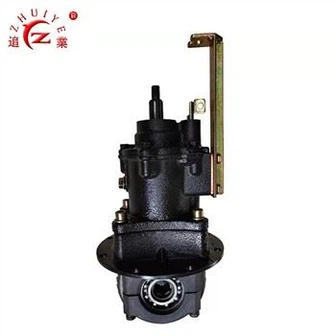
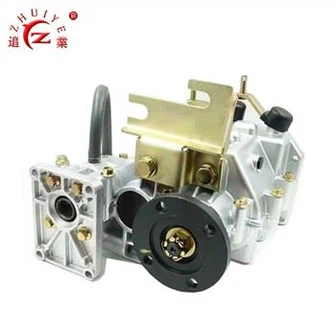
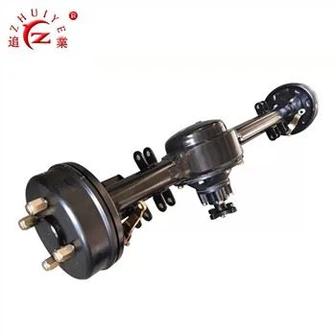
Differentials on modern automobiles are usually divided into two categories: gear differentials and slip differentials according to their working characteristics.
gear differential
limited slip differential
For structural reasons, this differential distributes the torque to the left and right wheels equally. This differential torque sharing characteristic can satisfy the normal driving of the car on a good road surface. But when the car is driving on a bad road, it seriously affects the passing ability. For example, when one drive wheel of a car is stuck in a muddy road, the car often cannot move forward (commonly known as slipping) although the other drive wheel is on a good road. At this time, the drive wheel on the muddy road spins in place, but the wheel on the good road is stationary. This is because the adhesion between the wheel and the road on the muddy road is small, and the road can only act a small reaction torque on the half shaft through the wheel, so the torque distributed to the wheel by the differential is also small. Although the adhesion between the other driving wheel and the good road surface is relatively large, due to the characteristic of evenly distributing torque, this driving wheel can only receive the same amount of torque as the slipping driving wheel, so that the driving force is insufficient. Overcoming the driving resistance, the car cannot move forward, and the power is consumed on the slipping drive wheels. At this time, increasing the accelerator not only cannot make the car move forward, but also wastes fuel and accelerates the wear of parts, especially the tire wear. The effective solution is to dig out the thin mud under the sliding drive wheel or place dry soil, gravel, branches, hay, etc. under the wheel.